
meditate.com.au
Menu
Zen
January 30, 2026
Daryl Ong
Deep Dives
Zen meditation, or Zazen, is the core practice of Zen Buddhism. Unlike Vedic meditation (which uses a mantra) or Vipassana (which often involves a body scan), Zazen is categorized as a Pointless or Objectless practice. It is defined by Shikantaza, the act of Just Sitting.
From a cognitive science perspective, Zen is the ultimate training in Open Monitoring (OM). Instead of focusing on a specific object, the practitioner remains in a state of Choiceless Awareness, where they observe all sensory and mental input without preference, judgment, or attachment. This guide explores the unique Global Brain effect of Zen and how to implement its discipline in a chaotic modern environment.
The Power of Open Monitoring
Zen practitioners do not shut out the world; they become more sensitive to it while remaining less reactive.
Neural Habituation and the Startle Response
A landmark study published in The Journal of Neuroscience by Lutz et al. (2008) explored how Zen-style Open Monitoring affects the brain’s response to distractions. The researchers found that experienced practitioners showed a unique pattern of Neural Habituation. While a sudden noise would startle a normal person and keep their brain active for several seconds, a Zen practitioner’s brain would register the noise and then immediately return to a baseline state.
The Non-Sticky Mind
The Lutz et al. (2008) study proved that Zen training creates a non-sticky mind. The brain processes information with high precision but does not cling to it. This prevents the Emotional Carryover that typically causes us to remain stressed long after a difficult meeting or interaction has ended.
Pain Sensitivity and Brain Mass
Because Zen involves maintaining a specific, often rigorous physical posture, it provides a unique laboratory for studying the brain’s relationship with physical discomfort.
Thickening the Pain-Regulating Cortex
Research from the University of Montreal, published in Psychosomatic Medicine by Grant et al. (2010), used MRI to compare the brains of Zen meditators to non-meditators. They found that Zen practitioners had significantly thicker Anterior Cingulate and Insular Cortices, the regions responsible for processing pain and emotion.
Thermal Pain Tolerance
The study by Grant et al. (2010) found that Zen practitioners were significantly less sensitive to pain, not because they blocked it, but because their brains processed the sensation without the usual emotional distress layer. They were literally physically tougher at a neurological level.
Neuroprotection Against Cognitive Decline
Beyond pain regulation, a critical study published in Neurobiology of Aging by Pagnoni & Cekic (2007) used Voxel-Based Morphometry to measure the effects of Zen on the aging brain. While the average person loses gray matter volume as they age, leading to slower reaction times and poor focus, the researchers found that Zen practitioners showed no significant correlation between age and gray matter loss in the putamen, a region vital for attentional processing.
This suggests that the rigorous Open Monitoring required in Zazen acts as a biological shield, effectively age-proofing the brain’s executive functions.
Zen Practice for Daily Life
Zen is as much about the physical posture as it is about the mental state. To implement this Deep Dive, you must adopt the Zazen Alignment.
Step 1: The Zazen Posture
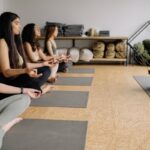
The Zazen posture requires a stable base to maintain spinal integrity. Sit on a firm meditation cushion or a chair with your back straight, imagining a string pulling the crown of your head to the ceiling. Keep your eyes half-open, gazing softly at a point on the floor about a meter in front of you. This eyes-open approach, unlike most other styles, keeps the brain in an Alpha/Beta alert state rather than drifting into a dreamy Theta state.
Step 2: The Gateway Breath (The 1-10 Count)
If just sitting feels impossible, start by counting your breaths. Inhale (1), Exhale (2), up to 10. Then restart. As noted by Lutz et al. (2008), this builds the inhibitory control required for the more advanced “Objectless” phase.
Step 3: Shikantaza (Just Sitting)
Drop the counting. Sit and be aware of everything, the sound of the traffic, the itch on your nose, the thought of dinner. Notice them, label them noise, and let them pass like clouds. Do not follow them.
The Beginner’s Mind
Zen is famous for the concept of Shoshin, or Beginner’s Mind. This is the practice of approaching every task, no matter how repetitive, with zero expectations.
Mindful Householding
Zen monasteries are famous for Samu (Work Practice). Use your daily chores (washing dishes, walking to the car) as Zazen. Don’t listen to a podcast; just be with the sensation of the water or the movement of your legs. This trains the Habituation response seen in the Grant et al. (2010) findings.
The Non-Reactive Meeting
During a high-stress meeting, maintain the Open Monitoring state. Observe the tension in your chest or the words of a colleague as just data. By not sticking to the emotion, you maintain the cognitive clarity required for a better response.
Summary: The Strength of Stillness
Zen is a rigorous neurological training for those who want to live with maximum clarity and minimum reactivity, a process that is often best initiated through the Best Guided Meditation Programs that specialize in Open Monitoring techniques. By utilizing the Wisconsin (Lutz et al.) findings on neural habituation and the Montreal (Grant et al.) proofs of cortical thickening, we see that Zazen is a powerful tool for building a resilient, non-sticky mind.
Build Your Zen Practice in 2026
Developing a “non-sticky” mind requires both the right technique and the right environment. To help you master the art of “Just Sitting” with consistency, we have tested and ranked the most effective tools, from ergonomic Zafus to science-backed training apps.
References & Scientific Sources
Lutz, A., et al. (2008). “Attention regulation and monitoring in meditation.” Trends in Cognitive Sciences. Source
Grant, J. A., et al. (2010). “Cortical thickness and pain sensitivity in zen meditators.” Emotion. Source
Pagnoni, G., & Cekic, M. (2007). “Age effects on gray matter volume and attentional performance in Zen meditation.” Neurobiology of Aging. Source